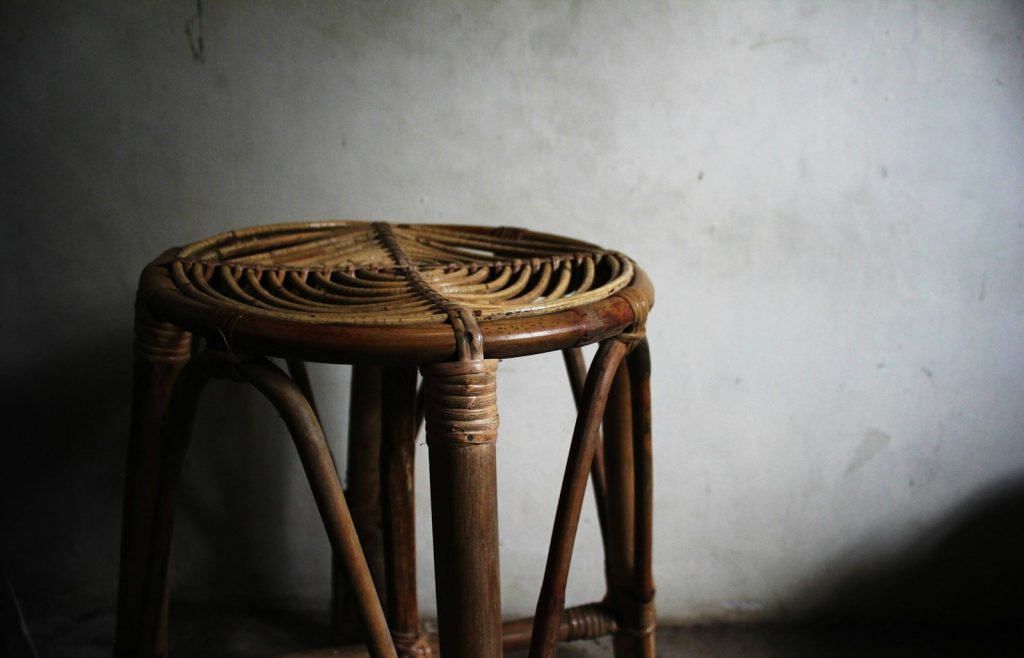
Rattan webbing hotel projects use woven rattan sheets (natural or synthetic) as a repeatable, spec-controlled material for guestroom headboards, lobby seating, and outdoor resort furniture. For FF&E buyers this means defining pattern, roll width, weave type, finish, and delivery terms so every one of 100+ rooms matches the approved mock-up.
Rattan Webbing for Hotels & Resorts: What FF&E Buyers Actually Need
For hotels and resorts, rattan webbing is not a décor impulse buy; it is a materials decision that must survive procurement, offshore fabrication, and on-site installation.
We support hospitality buyers in three main ways:
- Natural rattan webbing for indoor applications (headboards, armchairs, decorative panels, minibar doors, front desk facings).
- Synthetic PE rattan webbing and straps for outdoor pool, beach, and terrace furniture in UV and weather exposure.
- Specification control: consistent pattern, color tone range, and roll dimensions across the full FF&E scope.
As an independent Indonesian sourcing and export desk, we aggregate from multiple weaving houses in Cirebon, Central Java, and Kalimantan and ship under one consolidated QC and documentation process. This is often simpler for hotel project teams than negotiating mill-direct with several small workshops.
Indoor FF&E: Natural Rattan Webbing for Hotel Joinery and Furniture
Natural rattan is still the preferred material for interior hospitality rattan webbing because of its tactile feel, sustainability profile, and repairability.
Common Indoor Applications by Area
- Guestrooms: headboards, bed bases, wardrobe doors, TV panel accents, desk fronts, minibar cabinet doors.
- Suites: sliding room dividers, decorative ceiling panels, lounge chairs, coffee tables.
- Lobbies & lounges: armchairs, sofas with rattan backs/sides, reception desk cladding, wall panels, backlit features.
- F&B outlets: bar fronts, loose chairs, banquette back panels, partition screens.
- Spa & wellness: treatment room headboards, lockers, decorative screens.
For all of these, the buyer priorities are:
- Repeatable pattern across all rooms on a floor or building.
- Color tone range that matches veneer, fabric, and flooring selections.
- Appropriate openness for acoustic and privacy needs (e.g., tighter weave for headboards in business hotels).
Natural Rattan Weave Types We Supply
We carry the standard hospitality patterns used by European and US furniture makers who produce for major chains. Below is a simplified overview.
| Weave type | Typical hole pattern | Use in hotels | Pros / Constraints |
|---|---|---|---|
| Open cane (6-way) | Common: ½”, ⅝”, ¾” | Classic headboards, chair backs, cabinet doors | Good airflow and visual lightness; needs backing for full privacy or light block |
| Close weave (basket/plain) | No holes (tight) | Minibar doors, wardrobe panels, lift lobbies, acoustic panels | More privacy and shadow control; slightly higher cost per m² |
| Radio weave / diamond | Decorative, semi-open | Feature walls, boutique property headboards, F&B partitions | Stronger visual character; requires consistent color selection |
| French / herringbone patterns | Fine, semi-closed | High-end suite detailing, bar fronts, small-format panels | Premium look, slightly longer production lead time |
Within each pattern, we work with widths such as 40 cm, 45 cm, 60 cm, 90 cm, and 100 cm in standard rolls of 15 m or 30 m, depending on the weave and workshop. For hotel projects, specifying width early avoids offcut waste and unexpected over-consumption.
Natural Variation and Color Control
Natural rattan is an agricultural product. Even with careful sorting, there will always be variation in:
- Cane diameter and stripe pattern.
- Base color (cream, straw, light honey).
- Response to stain and lacquer.
For rattan webbing hotel projects, we manage this in three ways:
- Pre-approval panels: We send A4 or larger sample panels from the same production method used for bulk orders so designers can sign off on the realistic color range, not just a single ideal piece.
- Lot allocation: For 100+ room projects we reserve and weave from the same raw material batches to minimize visible shifts between phases.
- Finishing guidance: We provide simple finishing tests (clear coat, light stain) so your joiner can confirm achievable tones before final commitment.
You should not expect every sheet to be identical; you should expect the range to sit within an agreed tolerance band shown in your approved samples.
Recommended Specs by Hotel Segment
Different hotel types tend to favor different specifications:
- Upper-upscale / luxury beach resorts
- Often use open cane or decorative patterns for headboards and panels, with natural or lightly stained finishes. Typical hole size ½” to ⅝”, roll width 60–90 cm for headboards.
- Urban business hotels
- Prefer tighter or close-weave rattan for better acoustic performance and a calmer visual. Often used on wardrobe and minibar doors in neutral light oak-like tone.
- Boutique and design-forward properties
- Mix different weaves (radio + close weave) and occasionally specify custom-dyed cane. This usually requires longer sampling and production windows.
If you share your room type drawings and brand guidelines, we can suggest a limited weave set that satisfies design intent and simplifies procurement and stock.
Outdoor: Synthetic PE Rattan Webbing for Pool & Terrace Furniture
Natural rattan is not suitable for permanent outdoor exposure in most hotel environments. For pool decks, beach clubs, and open-air restaurants, we therefore supply synthetic PE rattan webbing and straps.
Where Hotels Use Synthetic Rattan
Common applications for hotel outdoor rattan include:
- Sunloungers and daybeds on pool and beach decks.
- Dining and lounge chairs in semi-outdoor F&B areas.
- Outdoor barstools and bar fronts.
- Balcony chairs and small tables in guestrooms and suites.
For these, the design may echo indoor natural rattan, but the performance requirements are different:
- UV stability to delay color fading.
- Resistance to rain, pool water, and cleaning chemicals.
- Dimensional stability under strong sun (limited stretching or warping).
We source flat and half-round PE rattan in widths typically from 4 mm up to 15 mm, in basket or herringbone weaves and in strap patterns, depending on the furniture maker’s frame design.
Color and Texture Matching
Resort rattan furniture webbing outdoors is usually specified to coordinate with:
- Powder-coated aluminum or steel frames (black, white, anthracite, sand).
- Teak or other hardwood table tops and arms.
- Brand color palette for cushions and umbrellas.
We can work with existing PE color cards (e.g., variations of coffee, camel, grey, charcoal, off-white) and send physical swatches. If your brand standard requires a very specific tone, we advise locking this at least one design phase before FF&E tender so that lead time for custom extrusion and lab approval is realistically planned.
Natural vs Synthetic for Hotels: Practical Comparison
| Aspect | Natural rattan webbing | Synthetic PE rattan webbing |
|---|---|---|
| Primary use | Indoor FF&E (headboards, panels, indoor seating) | Outdoor FF&E (pool, beach, balcony, semi-outdoor) |
| Durability outdoors | Not recommended for full exposure; can be used in well-sheltered areas | Designed for UV, rain, and temperature cycling |
| Look & feel | Warm, organic, visible grain and slight irregularity | More uniform, slightly cooler touch, grain is imprinted |
| Sustainability profile | Renewable forest product; supports rural weaving communities | Petrochemical-based but often paired with long product life and frame re-use |
| Maintenance | Gentle vacuuming, damp cloth, controlled humidity helpful | Hose down, mild detergent; avoid strong solvents |
Most hotels end up with a hybrid solution: natural indoors, synthetic outdoors, with careful color coordination between the two to keep a continuous brand story.
Specifying Rattan Webbing Across 100+ Hotel Rooms
For FF&E buyers, consistency is more critical than experimentation. Installing 200 headboards with slightly different pattern sizes or color shifts is rarely acceptable.
Standardizing Specifications
We encourage procurement and design teams to formalize rattan webbing specifications as they would any other architectural finish:
- Pattern code: open cane ½”, close weave basket, etc.
- Roll width: match the key module (e.g., headboard width, wardrobe door height).
- Roll length: 15 m or 30 m depending on workshop; used for calculating take-off.
- Finish at destination: clear-coated, stained, lacquered, or raw for factory finishing.
- Approved sample reference: code and physical swatch signed by design and ownership.
Once locked, these specs should appear consistently in:
- Interior design schedules.
- Joinery and loose furniture shop drawings.
- FF&E procurement BOQ and PO line items.
This reduces the risk of your joinery supplier substituting a “similar” pattern from a different mill late in the process.
Quantity Planning for Guestroom Programs
For a typical 200-key resort with rattan headboards and wardrobe inserts, consumption per room often looks like:
- Headboard insert: 1.4–2.2 m² per room, depending on design.
- Wardrobe/minibar doors: 0.5–1.2 m² per room.
With corridors, suites, public areas, and spares, total natural rattan webbing demand can easily reach 500–1,200 m². For such volumes we:
- Confirm your take-off and wastage assumptions (commonly 10–15% depending on pattern and cutting layout).
- Propose an order split if needed (e.g., 70% initial, 30% optional follow-on from the same lot within a certain time window, subject to raw material availability).
- Plan production so that all sheets for the main room blocks are woven and QC’d before shipping, limiting intra-project variation.
Early discussion, even at concept or schematic design stage, helps align weave selection with realistic MOQs and lead times.
MOQ, Pricing Ranges, and Lead Times for Hospitality Orders
We do not publish fixed prices because weaving house costs, raw rattan, and freight fluctuate. The ranges below are indicative and were last verified June 2026 from supplier quotations for export-ready orders ex-Indonesia.
Minimum Order Quantities (MOQ)
MOQ depends on pattern and whether you accept standard widths and finishes.
- Standard natural open cane and close weave:
Typical MOQ 5–10 rolls per pattern/width (roughly 75–300 m² depending on roll size). - Specialty patterns (radio weave, herringbone, custom colors):
MOQ may increase to 10–20 rolls per pattern because of setup and sorting requirements. - Synthetic PE rattan:
MOQ is usually driven by color and profile. Standard colors and profiles can start around one full carton or coil set per color; custom colors require higher volume for extrusion.
For large hotel FF&E programs, MOQs are rarely a constraint; more often they are exceeded by default.
Indicative Pricing Ranges (Ex-Factory / Ex-Indonesia)
All ranges are indicative only and exclude international freight, duties, and importer handling. Final quotations depend on specification, volume, and trade terms.
- Natural open cane rattan webbing:
Broadly, mid–high single-digit to low double-digit USD per m² for regular export quality, depending on pattern, width, and finish condition (raw vs. pre-finished). - Natural close weave and specialty patterns:
Typically a premium over open cane due to denser material and longer weaving time per m². - Synthetic PE rattan webbing/straps:
Priced either per kg or per m² equivalent; often comparable to or slightly above basic natural cane for standard colors, with a premium for textured high-end finishes or custom colors.
For serious project buyers (joinery factories, FF&E procurement firms, hotel ownership entities), we prepare detailed pro-forma quotations with line-item specs and validity windows.
To request a project quote, share your BOQ, drawings, or at least room counts and typical details and we will revert with a specification-based offer. You can plan your trip to our sourcing office and weaving partners if you or your furniture supplier wish to inspect production; WhatsApp coordination is available to streamline such visits.
Lead Times and Scheduling
Indicative production windows (excluding ocean/air freight and customs):
- Standard patterns, moderate volumes (≤500 m²):
Approximately 3–5 weeks from deposit and final spec confirmation to ex-factory readiness. - Larger volumes or multiple patterns (500–1,500+ m²):
Often 5–8 weeks, plus time for sample approvals if not previously locked. - Custom PE colors or unusual natural finishes:
Add 2–3 weeks for tooling, color matching, and laboratory or mock-up approvals.
Transport timing depends on route and Incoterm:
- Sea freight from Indonesia to main Asian ports is commonly around 1–3 weeks port-to-port; to Europe or North America, 4–6 weeks is typical shipping transit, plus clearing.
- Air freight is available for urgent top-up orders at higher cost; we generally recommend sea for the main bulk to protect your FF&E budget.
Aligning our lead times with your FF&E schedule is most effective when rattan webbing is specified and approved during design development, not left as a late-stage material substitution.
Trade Terms, Documentation, and QC for Hospitality Buyers
As a hospitality rattan webbing supplier focused on export, we are structured around predictable documentation and trade flows.
Incoterms and Shipping Options
We can quote and supply under common Incoterms:
- EXW (Ex Works) Indonesia:
You handle pickup, export clearance, and freight. Suitable if your logistics partner already consolidates Indonesian sourcing. - FOB main Indonesian ports:
We deliver goods on board at agreed port; you nominate the vessel and handle freight and insurance. - CIF/CFR key destination ports:
On request we can include ocean freight and insurance to your port; local charges and inland logistics remain for your forwarder or local partner.
For hotels that work through nominated FF&E consolidators, we can ship to your consolidator’s warehouse or loading point, as long as Incoterms and consignment details are clear.
Country of Origin, HS Codes, and Compliance
We routinely provide:
- Commercial invoice and packing list.
- Certificate of Origin (usually Form AK, AJ, or equivalent where applicable, issued by authorized Indonesian bodies).
- Fumigation certificates for wooden packaging when required.
- HS code references typically used by importers for natural rattan webbing and plastic-based synthetic webbing (your customs broker should confirm the final classification for your jurisdiction).
Some countries and hotel ownership groups also request documentation on:
- Legality of raw material harvest (especially for natural rattan coming from forest or agroforestry sources).
- Basic chemical use and finish declarations (particularly for indoor rattan in contact with guests).
We can share supplier declarations where available; if a specific certification is mandatory for your project, tell us at RFQ stage so that feasibility and cost impact can be assessed.
Quality Control (QC) for Hotel-Scale Orders
Our QC process is built for repeat contracts with joinery factories and furniture manufacturers. Typical steps include:
- Initial sampling:
Physical samples labeled with pattern code, width, and batch date. Approved samples stored in our office and, ideally, in your design library. - In-line weaving checks:
Monitoring of pattern consistency, hole size, and weaving tension at the workshop level. - Pre-shipment inspection:
Spot checks of roll length, width, visible defects (breaks, color outliers, stains), and moisture conditions before packing. - Documentation and photos:
On request we can provide photos of the bulk rolls and QC markings before container stuffing or handover to your consolidator.
For critical brand projects or large chains, we are comfortable aligning with third-party QC or your nominated inspection agents if needed.
Sustainability: Why Hotels Specify Natural Rattan Indoors
Sustainability narratives increasingly influence interior material choices in hospitality, especially for resorts and wellness-focused properties.
Natural Rattan as a Renewable Material
Natural rattan is:
- A rapidly renewable vine from tropical forests and agroforestry systems.
- Harvested and processed largely by smallholder communities and rural workshops.
- Compatible with low-VOC finishing systems when specified correctly.
By choosing natural rattan for indoor FF&E, hotels can point to tangible material decisions that support forest-based livelihoods and reduce reliance on fully synthetic materials indoors.
We do not claim that any specific batch of rattan is “carbon neutral” or certified unless supporting documentation exists. What we can confirm is origin, processing chain, and the nature of the material itself.
Balancing Sustainability with Performance Outdoors
PE-based hotel outdoor rattan will never be as intrinsically “natural” as cane, but in resort applications it can still support responsible use through:
- Long service life before replacement, especially on robust aluminum frames.
- Ease of re-strapping or re-webbing when the structure is still sound.
- Conservation of natural rattan for indoor use where its properties are better suited.
If your brand’s sustainability framework has specific material guidelines, we can help map our supply options against those requirements so that the specification is both compliant and buildable.
Working With Us on Your Next Rattan Webbing Hotel Project
Our role is to function as a sourcing and export desk for rattan webbing in Indonesia, bridging hospitality buyers with multiple weaving houses and PE extruders. Typical engagement paths:
- Joinery contractors and furniture factories:
You provide drawings and BOQ for hotel projects. We help refine rattan specs and ship rolls ready for your cutting and assembly. - FF&E procurement firms:
You coordinate multiple factories. We act as a centralized rattan webbing supplier, reducing pattern and color drift between vendors. - Hotel ownership / asset managers:
You may wish to pre-specify rattan patterns and finishes across multiple properties. We set up reference codes and sampling that can be shared with different manufacturers.
If you are planning a sourcing visit to Indonesia to align multiple FF&E materials, you can plan your trip through our desk; we coordinate visits to weaving partners and sample rooms, and are reachable by WhatsApp for on-the-ground adjustments.
How to Request a Project Quote
To move from concept to price and lead time, sharing more detail up front is helpful. Ideally, send:
- Project name, country, and approximate opening date.
- Number of keys and key hotel zones using rattan (rooms, lobby, F&B, spa, outdoor).
- Drawings or at least photos of mood boards and reference pieces.
- Target patterns (if known) or openness and visual character you want.
- Required Incoterm and destination port or consolidator address.
We respond with:
- Material suggestions (natural and/or synthetic) suitable by application.
- Indicative m² take-off cross-checked against your data.
- Price ranges, MOQs, and estimated production plus shipping timelines.
- Sample plan and any testing that may be needed before full commitment.
Below are some focused questions and answers from hotel clients.
Can you match an existing rattan pattern from our brand standard?
In many cases yes, especially if the pattern is a common open cane or close weave variant. We will ask for physical samples or high-resolution close-up photos with a scale reference to identify hole size, strand width, and weaving method. Exact replication of proprietary or highly customized patterns may not always be possible, but we can often get within an acceptable tolerance that passes design and brand review.
Is natural rattan webbing suitable for air-conditioned hotel rooms?
Yes, natural rattan performs well in air-conditioned interiors, provided relative humidity is not kept excessively low for prolonged periods. We recommend that joiners frame and fix the webbing correctly (allowing for modest movement), and that headboards or panels are finished with appropriate clear coats or stains to stabilize the fibers. We share basic handling and installation notes with your manufacturer on request.
Can we use natural rattan webbing on covered outdoor terraces?
Very sheltered semi-outdoor areas with limited direct sun and rain exposure can sometimes use natural rattan, but the risk of premature aging increases. For hotel operations, we generally advise synthetic PE for any zones where staff cannot realistically protect furniture from weather events. If a design insists on natural cane outdoors, we will flag the maintenance implications clearly so you can plan life-cycle and replacement costs.
Do you ship small quantities for mock-ups before the main order?
Yes. For hotel mock-up rooms and prototype joinery we frequently ship small roll quantities or even cut sheets, usually above a modest value threshold to be commercially viable. These mock-up supplies are then used to refine the final specification and quantity. Freight efficiency for very small shipments is lower, so combining with other material samples or using consolidated air or sea options is recommended.
Can you coordinate shipments to multiple furniture suppliers on the same project?
We can, provided the commercial structure and responsibilities are clear. Some hotel projects prefer a single consolidated shipment to one FF&E consolidator; others want us to supply different joinery and furniture factories directly under separate POs, while keeping the material spec identical. We are comfortable with both models and will design the packaging, labeling, and documentation so each supplier receives exactly what their contract requires.