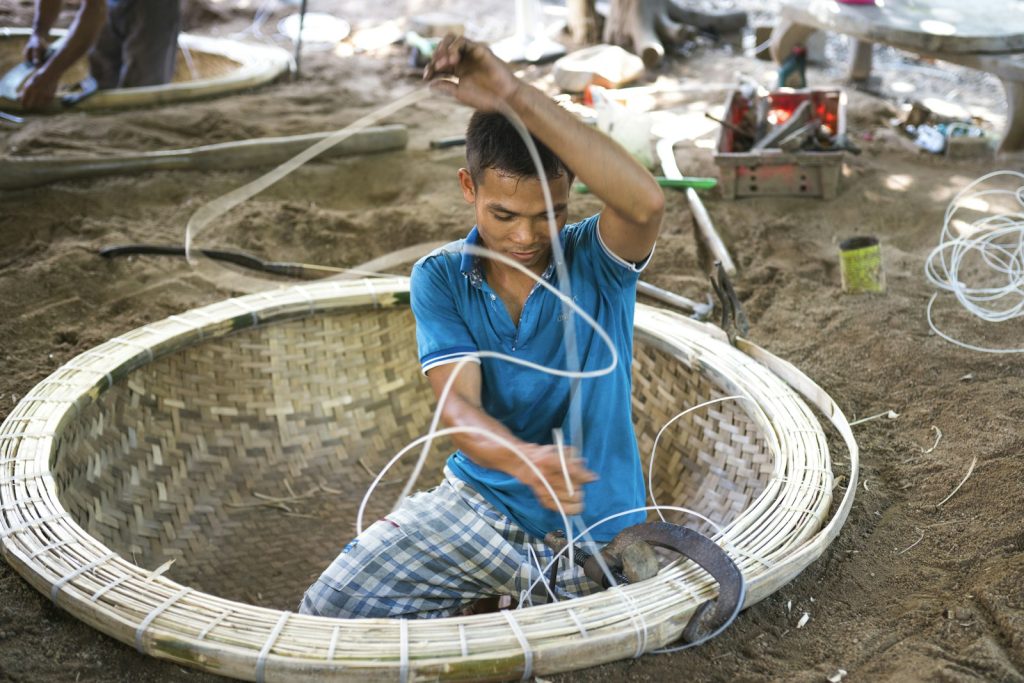
Sourcing & export note: Indonesia supplies over 80% of the world’s natural rattan raw material; we aggregate vetted producers in Cirebon, Jepara and Bali. Natural rattan (Calamus and Daemonorops spp.) is not listed under CITES, so no CITES permit is required. Roll dimensions, strand width, weave consistency and moisture (kiln-dried to a 12–16% range) vary naturally by producer and order. Prices are indicative ranges (last verified June 2026); final pricing is by quote per pattern and width. We are an independent sourcing and export desk, prepare standard export documents, and connect you to vetted Indonesian workshops — this is general information, not legal or customs advice.
Title: Rattan vs Seagrass Webbing: Choosing the Right Natural Material
For procurement professionals and designers specifying natural materials, understanding the distinctions between rattan vs seagrass webbing is fundamental. While both are natural fiber webbing types, their inherent properties, durability, aesthetic profiles, and ideal applications differ significantly, influencing project suitability and longevity. This guide clarifies those differences, offering a direct, technical comparison to inform your material selection.
Understanding the Core Differences: Rattan vs. Seagrass Webbing
The initial step in any rattan or seagrass comparison involves examining their fundamental characteristics. These materials originate from distinct botanical sources, which dictate their physical properties and, consequently, their suitability for various applications.
Botanical Origin and Fiber Characteristics
Rattan webbing is derived from the outer skin, or cane peel, of several species of climbing palm, primarily from the Calamus genus, such as *Calamus manan* (Manau), *Calamus caesius* (Tohiti), and *Calamus trachycoleus* (Sega). These palms are native to the tropical rainforests of Southeast Asia, with Indonesia being the world’s largest supplier. The cane peel is a dense, tough, and naturally glossy epidermal layer. This structure provides rattan with its characteristic strength and smooth surface. The fibers run longitudinally, contributing to its excellent tensile strength and flexibility when processed correctly.
In contrast, seagrass webbing, and its close relative water hyacinth webbing, originate from aquatic plants. Seagrass (*Zostera* species and others) is a flowering plant found in shallow marine environments, while water hyacinth (*Eichhornia crassipes*) is a freshwater plant that often grows rapidly, forming dense mats on the surface of tropical and subtropical waterways. For webbing production, the stalks and leaves of these plants are harvested, dried, and then twisted or braided into cords before weaving. Unlike rattan, which uses a continuous peel, seagrass and water hyacinth fibers are inherently shorter, more fibrous, and less uniform in cross-section. This difference in botanical structure is the root cause of many of their divergent material properties.
Strength and Durability: A Critical Factor in Rattan or Seagrass Comparison
When assessing natural fiber webbing types for structural or high-wear applications, strength and durability are paramount. Rattan webbing excels in this regard. The cane peel, particularly from robust species like Manau, possesses high tensile strength and inherent elasticity. This allows rattan webbing to be stretched taut and maintain structural integrity, making it suitable for load-bearing applications like chair seats, backrests, and furniture panels that require resilience. Properly installed and maintained rattan webbing can last for decades, resisting sagging and wear under regular use. Its ability to absorb and release moisture slowly contributes to its flexibility and resistance to sudden cracking.
Seagrass and water hyacinth webbing, while robust for their specific applications, are significantly less durable and possess lower tensile strength than rattan. The fibrous, somewhat brittle nature of dried seagrass and water hyacinth stalks means they are more prone to breaking if subjected to high tension, sharp impacts, or repeated stress. They do not possess the same inherent elasticity as rattan cane. For instance, using seagrass webbing for a chair seat would typically result in premature sagging, stretching, or breakage, especially with regular use. Their fibers can also be more susceptible to abrasion. This makes them less suitable for primary load-bearing surfaces in furniture and more appropriate for decorative panels or items with lighter functional demands.
Texture and Aesthetic Appeal
The aesthetic and tactile qualities of rattan vs seagrass webbing are markedly different, catering to distinct design sensibilities. Rattan webbing, particularly fine-weave patterns like hexagonal cane, offers a smooth, refined surface with a subtle natural sheen. The uniformity of the cane peel allows for tight, intricate weaves that present a classic, elegant appearance. Its neutral, often pale golden to light brown hue, provides a versatile base that can be stained, lacquered, or painted to match various interior design schemes. This classic look has sustained its popularity in furniture design for centuries.
Seagrass and water hyacinth webbing present a much rougher, more organic, and earthy texture. The individual twisted fibers are visibly coarser, creating a pronounced, rustic weave pattern. The color palette typically ranges from light green (when freshly dried) to various shades of natural brown, often with slight variations that add to its artisanal charm. This distinct texture is often sought after for designs aiming for a natural, bohemian, or coastal aesthetic. It introduces a tactile element that can add warmth and visual interest to a space. However, its coarse surface means it does not offer the same smooth finish as rattan.
Moisture Content and Environmental Response
Proper moisture content (MC) is critical for the longevity and performance of all natural fiber webbing types, but the response of rattan vs seagrass webbing to environmental humidity differs due to their cellular structure.
For natural rattan webbing, we target an export-ready moisture content of 8-12%. At this range, rattan cane is pliable enough for weaving and installation, yet stable enough to resist excessive expansion or contraction. Rattan has a relatively dense cell structure that allows it to absorb and release moisture slowly. This slow exchange helps it adapt to ambient humidity fluctuations without immediate adverse effects, though extreme, prolonged changes can lead to brittleness (too dry) or mildew (too damp). During installation, rattan webbing is traditionally soaked in water to increase its pliability, then stretched and stapled, tightening as it dries to achieve a taut surface.
Seagrass and water hyacinth fibers are generally more porous and absorbent. While they also require proper drying to prevent mold and ensure stability, they tend to react more quickly and dramatically to changes in atmospheric humidity. In very dry environments, seagrass can become brittle and prone to cracking or snapping. In highly humid conditions, it can absorb moisture rapidly, leading to swelling, potential sagging, and an increased risk of mildew if not properly ventilated. This quicker moisture exchange means seagrass webbing might require more stable environmental conditions to maintain its integrity over time, especially in applications where it is under tension. Our processing network ensures that seagrass and water hyacinth fibers are adequately dried and prepared for weaving to minimize these issues post-installation.
Finishing and Customization Potential
The ability to accept finishes further distinguishes rattan or seagrass comparison points. Rattan webbing, with its smooth, relatively non-porous surface, is highly receptive to a wide range of finishes. It can be stained to mimic various wood tones, lacquered for a protective, glossy, or satin finish, or painted to match specific color schemes. These finishes not only alter its appearance but also provide an additional layer of protection against moisture, UV, and wear, enhancing its durability and ease of cleaning. This versatility makes rattan a preferred choice for furniture manufacturers who need to offer customized aesthetic options.
Seagrass and water hyacinth webbing, owing to their rougher, more absorbent, and fibrous nature, are less suitable for elaborate finishing. While clear sealants or matte varnishes can be applied to offer some protection, stains tend to be absorbed unevenly, and paint can obscure the natural texture while potentially making the fibers brittle or flaky. Most often, seagrass and water hyacinth webbing are left in their natural, unfinished state to highlight their organic texture and color. This limits aesthetic customization but emphasizes a raw, authentic look that is highly valued in specific design contexts.
Applications: When to Choose Rattan and When to Opt for Seagrass Webbing
Understanding the material properties translates directly into informed application choices. Each material has an optimal use case where its strengths are leveraged, and its limitations are mitigated.
Rattan Webbing: The Furniture Industry Standard
Rattan webbing is the undisputed standard for quality furniture construction, particularly for items requiring structural integrity and longevity. Its high tensile strength and durability make it ideal for:
* Chair Seats and Backrests: Capable of supporting body weight with proper installation, providing both comfort and a classic aesthetic. This is a primary application where the “rattan vs seagrass webbing” distinction is most critical.
* Cabinet Door Inserts: Offers ventilation and a decorative element without sacrificing structural stability, common in mid-century modern and colonial designs.
* Headboards and Bed Frames: Adds texture and visual lightness to bedroom furniture while being robust.
* Room Dividers and Screens: Provides privacy and decorative appeal in both residential and commercial settings.
* Drawer Fronts and Table Inlays: Adds a sophisticated detail to casegoods.
Our rattan webbing is sourced from certified forests in Indonesian regions like Sumatra, Kalimantan, and Sulawesi, with primary processing hubs in Cirebon, West Java. This ensures a consistent supply of high-grade Manau, Tohiti, and Sega cane peel, suitable for furniture-grade applications.
Seagrass/Water Hyacinth Webbing: For Decorative and Lighter-Use Items
Seagrass and water hyacinth webbing are best employed in applications where their unique texture and aesthetic are prioritized over high structural strength or heavy-duty durability. They are excellent for:
* Decorative Panels and Wall Coverings: Adds a natural, textural dimension to interiors.
* Basketry and Storage Solutions: Their flexibility when woven makes them perfect for various basket forms.
* Accent Furniture Elements: Used for non-load-bearing panels in side tables, console tables, or decorative screens where the material’s rustic appeal is desired.
* Lampshades: Diffuses light beautifully, creating a warm, inviting ambiance.
* Craft and DIY Projects: Popular for its ease of handling and distinctive look in various artisanal creations.
While Rattan Webbing Supplier primarily specializes in rattan, our extensive network allows us to act as a seagrass webbing supplier and source high-quality water hyacinth webbing to meet specific project demands. We work with artisans and smaller mills across Indonesia who specialize in these materials, ensuring quality and adherence to specifications, even for these more niche natural fiber webbing types.
Rattan vs. Seagrass Webbing: Feature Comparison
To provide a clear overview, here is a direct comparison of key features:
| Feature | Rattan Webbing | Seagrass/Water Hyacinth Webbing |
| :————————– | :——————————————- | :———————————————- |
| Origin | Calamus spp. climbing palm (vine) | Aquatic grasses (*Zostera*, *Eichhornia crassipes*) |
| Fiber Type | Cane peel (epidermis) | Dried stalks/leaves, often twisted into cord |
| Primary Strength | High tensile strength, structural | Moderate to low, primarily decorative |
| Texture | Smooth, uniform, refined | Coarse, fibrous, rustic, pronounced weave |
| Durability | High, long-lasting, resistant to sagging | Moderate, can be brittle, prone to abrasion |
| Flexibility | High when moist, holds shape when dry | Moderate, can crack if very dry, less elastic |
| Finish Receptivity | Excellent (stains, lacquers, paint) | Limited (typically natural, clear coat only) |
| Moisture Response | Stable at 8-12% MC, slow absorption/release | More susceptible to humidity swings, faster absorption/release |
| Typical High-Demand Use | Chair seats, cabinet doors, headboards | Baskets, wall coverings, decorative panels |
| Aesthetic | Classic, refined, versatile | Earthy, organic, natural, pronounced texture |
Weave Patterns and Strand Widths: Customization Across Natural Fiber Webbing Types
The variety of weave patterns and available strand widths significantly impacts both the aesthetic and functional properties of webbing. We offer extensive customization across various natural fiber webbing types.
Rattan Weave Patterns
Our expertise in rattan webbing allows for a broad array of patterns, each serving different design and strength requirements:
* Open Cane Webbing (Hexagonal Cane): The most recognizable pattern, featuring a six-sided open weave. This pattern is iconic for chair seats and backrests, offering breathability and classic aesthetic. Available in various mesh sizes (e.g., 1/2″, 5/8″, 3/4″ hex).
* Closed Cane Webbing: A tighter, more solid weave created by overlapping strands, offering increased privacy and a more uniform appearance. It’s often used for cabinet inserts or decorative panels where a more opaque look is desired.
* Herringbone Weave: Characterized by its distinctive V-shaped pattern, adding a sophisticated textural element. It’s often used for decorative panels and screens.
* Radio Weave: A more dense, often square-patterned weave that provides a clean, modern look. It offers good strength and is popular for contemporary furniture designs.
* Basket Weave: A simple over-and-under pattern, creating a robust, often thicker texture. This can be executed with wider strands for a more pronounced effect.
* Matting: A very dense, almost solid weave, often used for wall coverings or surfaces requiring significant coverage and texture without transparency.
Strand widths for rattan cane peel typically range from 1.5mm to 3mm, depending on the desired pattern and strength. Finer strands are used for intricate hexagonal weaves, while wider strands can create bolder patterns.
Seagrass/Water Hyacinth Weave Patterns
Due to the nature of their fibers, seagrass and water hyacinth webbing typically feature coarser, more overtly textured weave patterns. Common patterns include:
* Basket Weave: A straightforward over-and-under pattern, often with thicker, twisted cords, creating a robust and rustic look.
* Twill Weave: Creates a diagonal rib pattern, adding another layer of texture.
* Braided Patterns: Fibers are often braided into thicker cords before weaving, resulting in prominent, dimensional textures.
* Looser Weaves: Some applications benefit from a more open, airy weave that highlights the individual fibers.
These patterns often use thicker, pre-twisted cords of seagrass or water hyacinth, typically ranging from 3mm to 6mm in diameter, contributing to their distinctive, organic appearance.
Standard Dimensions and Customization
For both rattan and other natural fiber webbing types, standard roll specifications are crucial for efficient procurement.
* Rattan Webbing: Standard roll widths are 45cm (18 inches), 60cm (24 inches), and 90cm (36 inches). Standard length is 15 linear meters (approximately 49.2 feet). Custom widths and lengths can be accommodated, though they typically incur higher MOQs and longer lead times.
* Seagrass/Water Hyacinth Webbing: Standard widths are often similar to rattan, ranging from 45cm to 90cm, with roll lengths typically around 10-15 linear meters. Custom dimensions are also available through our network.
Procurement and Quality Control for Natural Webbing Materials
As a trade-professional B2B desk, we understand that consistent quality and transparent communication about material characteristics are paramount. Our processes are designed to deliver export-ready products with full documentation.
Natural Variation vs. Manufacturing Defects in Handwoven Rattan
It is critical for buyers to differentiate between natural variations inherent in handwoven rattan and actual manufacturing defects. Rattan is a natural, organic material, and slight inconsistencies are part of its charm and authenticity. We are candid about these expectations:
* Color Variation: Natural rattan cane will exhibit subtle color differences, ranging from pale cream to light golden brown, even within the same roll. This is due to variations in plant maturity, growing conditions, and natural pigmentation. These are not defects.
* Diameter Inconsistencies: While we strive for uniformity, minor fluctuations in the strand diameter (e.g., +/- 0.2mm) are normal, especially in hand-stripped cane. These are generally imperceptible once installed.
* Minor Knots or Imperfections: Rattan vines naturally have nodes or slight irregularities. While our processing minimizes these, very small, occasional knots or slight surface marks are part of the material’s character and are not considered defects unless they compromise structural integrity or are overtly prominent.
* Weave Tension: In handwoven products, minor variations in weave tension can occur, particularly at the edges of a roll. Our QC process identifies and rejects rolls with significant or impactful tension inconsistencies.
What constitutes a manufacturing defect? These include broken strands, significant gaps in the weave, unevenly cut edges that affect usability, overt staining from processing, mold growth, or a moisture content outside the acceptable range (below 8% or above 12%) post-drying. Our visual inspection protocols are stringent to catch these.
Moisture Content: The Unsung Hero of Rattan Webbing Longevity
The correct moisture content (MC) is arguably the single most important factor for the long-term stability and workability of natural rattan webbing. As mentioned, we target an MC of 8-12% for export. This range is achieved through meticulous drying processes in Cirebon, where the climate and established infrastructure are conducive to consistent results. Each batch undergoes moisture testing using calibrated meters to ensure it meets our specifications. Deviations from this range can lead to:
* Too Dry (<8% MC): The cane becomes brittle, prone to snapping during installation, and will not stretch properly when wet. It is also more susceptible to cracking once installed.
* Too Wet (>12% MC): The cane is prone to mold and mildew growth during transit and storage. It may also shrink excessively upon drying after installation, potentially causing tension issues or warping.
Our Sourcing Network for Seagrass Webbing Supplier Needs
While rattan is our core focus, we understand the demand for diverse natural fiber webbing types. As a reputable seagrass webbing supplier through our network, we work with established artisans and small-scale mills across Indonesia specializing in these materials. Our process involves:
* Vetting Suppliers: We partner only with producers who demonstrate consistent quality in fiber preparation, weaving, and drying.
* Sample Approval: We facilitate sample provision for buyers to confirm texture, color, and weave quality before large-scale orders.
* Quality Checks: Even for sourced materials, we implement our standard quality checks, focusing on consistent weave, absence of mold, and appropriate drying.
Quality Assurance at Rattan Webbing Supplier
Our commitment to quality extends to every roll of webbing we export. Our QC process adheres to international standards and includes:
* Visual Inspection: Each roll is inspected for weave consistency, absence of defects (broken strands, large gaps, stains), and overall aesthetic appeal.
* Tensile Strength Testing: Random samples are tested to ensure the webbing can withstand appropriate tension without breakage, particularly for structural rattan applications.
* Moisture Content Verification: As detailed above, MC is rigorously checked.
* Dimensional Accuracy: Roll widths and lengths are verified against specifications.
Our partner mills are ISO 9001 certified, ensuring a systematic approach to quality management from raw material to finished product.
To discuss specific quality parameters or obtain samples for your project, please plan your trip with us. Our team is also available via WhatsApp for immediate inquiries.
Logistics and Trade Information: Your Guide to Export-Ready Webbing
Transparent and precise logistical information is vital for B2B transactions. We provide clear guidelines on roll specifications, MOQs, lead times, Incoterms, and pricing insights.
Standard Roll Specifications and Minimum Order Quantities (MOQ)
Our standard rattan webbing rolls are typically 45cm, 60cm, or 90cm wide, and 15 linear meters in length. Custom widths and lengths are available upon request.
* Minimum Order Quantity (MOQ):
* Standard Rattan Webbing: 50 linear meters per pattern and width.
* Custom Rattan Webbing (specific patterns, widths, or lengths): 100-200 linear meters, depending on complexity.
* Seagrass/Water Hyacinth Webbing (through our network): MOQs typically start at 50-100 linear meters, subject to the specific artisan or mill.
Lead Times and Incoterms
Understanding lead times is critical for project planning.
* Standard Rattan Webbing: Expect 4-6 weeks from order confirmation to shipment for established patterns and dimensions.
* Custom Rattan Webbing: Lead times for bespoke patterns, unique widths, or large quantities can range from 8-12 weeks.
* Seagrass/Water Hyacinth Webbing: Lead times generally align with custom rattan, at 8-12 weeks, as these are often sourced from specialist artisans.
We operate with standard International Commercial Terms (Incoterms) to ensure clarity in shipping responsibilities:
* FOB (Free On Board): We deliver goods to the agreed port of shipment (e.g., Tanjung Priok, Jakarta; or Tanjung Perak, Surabaya), and the buyer assumes responsibility for freight, insurance, and import duties thereafter.
* CIF (Cost, Insurance, and Freight): We cover the cost of goods, insurance, and freight to the named port of destination. Risk transfers to the buyer once goods are loaded onto the vessel.
* EXW (Ex Works): The buyer assumes all costs and risks from our factory or warehouse in Cirebon.
Packaging and Shipping
All webbing rolls are carefully prepared for international shipping to prevent damage and maintain quality.
* Standard Packaging: Rolls are typically wrapped in protective film and then enclosed in durable woven polypropylene (PP) bags or sturdy cardboard boxes, depending on buyer preference and shipping method.
* Container Loading: We ensure efficient container loading to optimize space and minimize shipping costs. Full container load (FCL) and less than container load (LCL) options are available.
Pricing Insights (Last Verified June 2026)
Pricing for natural fiber webbing is dynamic, influenced by raw material availability, labor costs, weave complexity, and order volume.
* Natural Rattan Webbing (Cane Peel): Ranges from approximately $8 to $25 per square meter. This wide range accounts for variations in cane quality (e.g., Tohiti vs. Manau), weave pattern (e.g., simple basket weave vs. intricate hexagonal), and strand width.
* Seagrass/Water Hyacinth Webbing: Due to the artisanal nature and varied sourcing, prices typically range from $7 to $20 per square meter, depending heavily on the weave pattern, fiber processing, and supplier network.
Please note that these are indicative ranges. For a precise quotation tailored to your specific project requirements, quantity, and desired specifications, please reach out to our sales team.
Sustainability and Ethical Sourcing of Natural Fibers
As a materials-procurement desk, we recognize our responsibility in promoting sustainable practices within the rattan and natural fiber industries.
Responsible Rattan Harvesting
Our rattan is sourced from managed forests in Indonesia, where harvesting practices are monitored to ensure regeneration and ecological balance. Rattan is a fast-growing vine that can be harvested without destroying the host tree or the forest ecosystem, making it a highly sustainable resource when managed correctly. We work with suppliers who adhere to these principles, supporting local communities through fair labor practices and contributing to the economic well-being of rural areas dependent on the rattan trade. This commitment ensures that the classic beauty of rattan can be enjoyed for generations to come.
The Environmental Profile of Seagrass and Water Hyacinth
Seagrass and water hyacinth are also considered renewable resources. Seagrass grows abundantly in coastal marine environments and can be harvested sustainably. Water hyacinth, while beautiful, is often an invasive species in many tropical freshwater ecosystems, choking waterways and harming biodiversity. Harvesting water hyacinth for craft and webbing production serves a dual purpose: it provides a sustainable raw material and helps manage an environmental problem, clearing waterways and supporting local livelihoods. Our network prioritizes suppliers who engage in ethical harvesting and processing of these materials.
Partnering with Rattan Webbing Supplier for Your Natural Fiber Needs
Choosing the right partner for natural fiber webbing procurement is about more than just securing materials; it’s about reliable supply, consistent quality, and expert guidance.
Comprehensive Natural Fiber Webbing Types Available
Whether your project demands the classic strength and versatility of rattan webbing or the rustic, organic texture of seagrass and water hyacinth webbing, we are equipped to meet your needs. We provide in-depth technical specifications, guidance on optimal material usage, and full trade documentation for smooth international transactions. Our expertise spans all natural fiber webbing types, ensuring you get the right material for the right application.
Why Choose Us as Your Seagrass Webbing Supplier and Rattan Partner
* Technical Expertise: