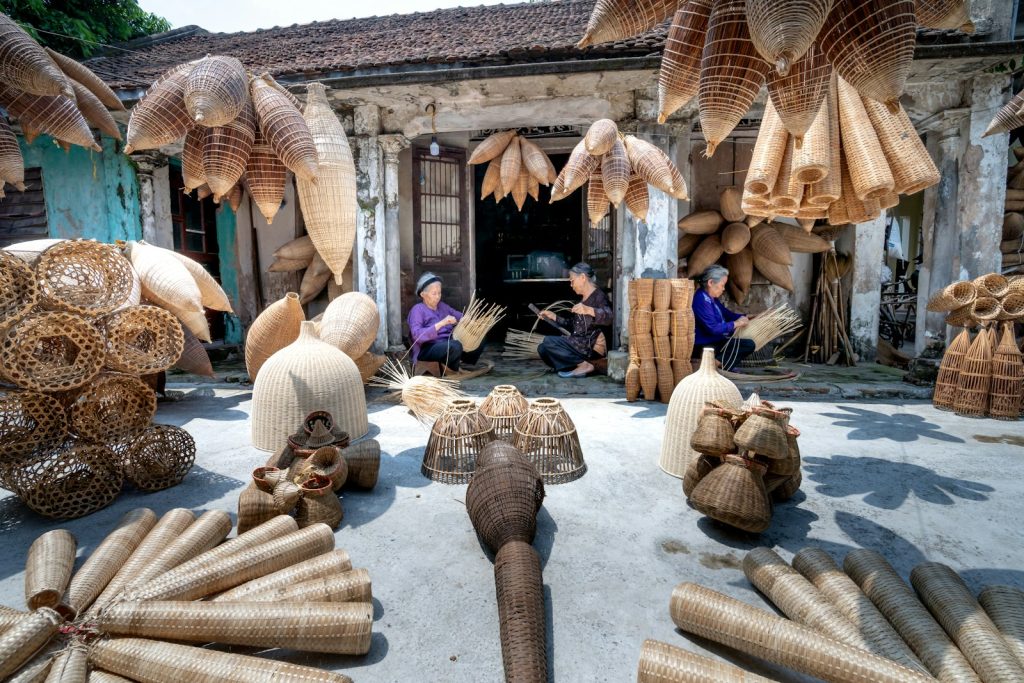
Sourcing & export note: Indonesia supplies over 80% of the world’s natural rattan raw material; we aggregate vetted producers in Cirebon, Jepara and Bali. Natural rattan (Calamus and Daemonorops spp.) is not listed under CITES, so no CITES permit is required. Roll dimensions, strand width, weave consistency and moisture (kiln-dried to a 12–16% range) vary naturally by producer and order. Prices are indicative ranges (last verified June 2026); final pricing is by quote per pattern and width. We are an independent sourcing and export desk, prepare standard export documents, and connect you to vetted Indonesian workshops — this is general information, not legal or customs advice.
Rattan webbing for France, particularly for the esteemed tradition of `cannage rattan webbing france`, demands specific quality and dimensional consistency that we, as Rattan Webbing Supplier, meticulously source and export. Our operations provide natural and synthetic webbing solutions, ensuring that the unique requirements of the French market, from open-weave hexagonal patterns to precise roll widths and strand dimensions, are met with professional reliability and transparent trade practices.
The Enduring Legacy of Cannage in France
France stands as a global leader in the art of antique chair cannage, a tradition deeply embedded in its furniture heritage. This intricate craft, involving the weaving of rattan cane into chair backs and seats, has been practiced for centuries, giving rise to iconic styles such as Louis XV and Louis XVI. The demand for high-quality `rattan webbing france` is consistently driven by expert restorers and furniture manufacturers who uphold these historical standards.
The French Tradition of Cane Restoration
The restoration of antique chairs in France is not merely a repair; it is a preservation of cultural legacy. Each piece, whether a family heirloom or a museum acquisition, requires materials that respect its original construction and aesthetic. This often means sourcing natural rattan webbing that replicates the specific weave, color, and texture of the era. The discerning nature of French restorers means that material quality, weave integrity, and dimensional accuracy are paramount. They understand that the subtle variations inherent in handwoven natural materials are part of their charm, but consistency within agreed-upon specifications is non-negotiable for professional restoration work.
Identifying Authentic French Cannage Needs
When French restorers speak of “cannage,” they typically refer to the classic open-weave hexagonal pattern. This distinct pattern allows for both aesthetic appeal and practical ventilation, making it ideal for seating surfaces. Beyond the pattern, specific dimensions are crucial. The width of the rattan strands, the overall width of the webbing roll, and the control of moisture content are all critical factors that determine the suitability of a product for the French market. Our role as a `rotin webbing supplier france` is to bridge the gap between skilled Indonesian producers and the precise demands of these European artisans.
Specific Sourcing for French Restorers: Key Specifications
Meeting the exact needs of the French market requires adherence to strict specifications. Our sourcing process is designed to vet producers based on these precise criteria, ensuring that the `rattan webbing french market` receives materials that are fit for purpose.
Open-Weave Hexagonal Pattern: The Cannage Standard
The open-weave hexagonal pattern is the cornerstone of traditional French cannage. This pattern features six strands crossing at each intersection, forming a series of small, open hexagons. We prioritize producers who consistently deliver this pattern with uniform tension and even spacing, avoiding loose strands or irregular cell sizes that would compromise the aesthetic and structural integrity of a restored piece. Our QC checks specifically assess:
* Cell Uniformity: Consistent size and shape of each hexagon.
* Strand Tension: Even tension across the entire roll to prevent sagging or distortion.
* Weave Consistency: Absence of dropped strands or irregular weaving.
Roll Widths for Antique Chair Cannage (45–60 cm)
Antique French chairs, particularly those from the Louis periods, often feature standardized dimensions for their caned sections. For this reason, `cannage rattan webbing france` is most commonly required in roll widths ranging from 45 cm to 60 cm. While narrower and wider rolls are available for other applications, these specific widths minimize waste and labor for restorers working on standard chair frames. We typically stock or can rapidly source rolls in:
* 45 cm (approx. 18 inches)
* 50 cm (approx. 20 inches)
* 60 cm (approx. 24 inches)
Custom widths are also possible, though they typically incur higher MOQs and longer lead times due to specialized production runs. Candidly, coordinating specific custom widths across multiple ateliers in Cirebon requires careful planning and communication to ensure consistent quality.
Strand Width: 2.0mm for Louis XV/XVI Styles
The aesthetic and durability of Louis XV and Louis XVI style chairs often dictate a specific strand width for the rattan. A 2.0mm strand width (or approximately 2mm) is generally preferred for its balance of elegance and strength. This size provides the delicate appearance characteristic of these historical designs while offering sufficient resilience for long-term use. Deviation from this standard, either significantly finer or coarser, can alter the historical accuracy and visual balance of the finished piece. Our QC process includes precise measurement of strand widths to confirm they meet these narrow tolerances.
Material Quality: Moisture Control and Weave Consistency
Beyond pattern and dimensions, the inherent quality of the rattan material itself is critical. Natural rattan is a hygroscopic material, meaning it absorbs and releases moisture from the air. For export, especially to varying climates, strict moisture control is essential to prevent mold, mildew, and warping during transit and storage. Our producers follow established drying protocols, and our outbound QC includes random checks for moisture content. We aim for a consistent moisture level between 8-12% for export-ready material.
Weave consistency, as distinct from pattern uniformity, refers to the overall integrity and finish of the roll. This includes:
* Knotting: Minimal and discreet knotting of individual rattan strands, necessary for continuous weaving.
* Color Consistency: While natural rattan will have slight variations, we ensure general color uniformity within a roll and across an order.
* Edge Cleanliness: Neatly trimmed edges without excessive fraying.
The following table provides a quick reference for common specifications tailored for the French market:
- Preferred Pattern
- Open-Weave Hexagonal (Cannage)
- Standard Roll Widths
- 45 cm, 50 cm, 60 cm
- Common Strand Width
- 2.0mm (for Louis-style chairs)
- Material Type
- Natural Rattan Cane (Pelekat, Fitrit, or similar)
- Moisture Content (Export)
- 8-12%
- Typical Roll Length
- 15 meters (50 feet) or 30 meters (100 feet)
Understanding EU Import Regulations for Rattan Webbing France
Importing `rattan webbing france` requires a clear understanding of European Union customs regulations. Navigating these requirements ensures smooth entry and avoids unnecessary delays or costs.
Chapter 46 CCT Rate: Navigating Customs Duties
Rattan webbing falls under Chapter 46 of the Harmonized System (HS) code, specifically relating to “Manufactures of straw, of esparto or of other plaiting materials; basketware and wickerwork.” The Combined Nomenclature (CN) code for rattan webbing typically starts with 4602. The Common Customs Tariff (CCT) rate for such products imported into the EU from Indonesia is subject to change based on trade agreements and EU policy. As of our last verification (June 2026), the general MFN (Most Favoured Nation) duty rate can range from 0% to 3.7%, though specific rates depend on the exact HS code classification and any prevailing trade agreements between Indonesia and the EU. Buyers are advised to verify the precise HS/CN code and current CCT rate with their local customs agent or the TARIC database before placing an order to avoid unexpected charges. We provide the necessary documentation to facilitate accurate classification.
Required Documentation for Seamless Import
To ensure a seamless import process into France and the wider EU, comprehensive documentation is critical. We prepare and provide all standard export documents, including:
* Commercial Invoice: Detailing goods, quantities, values, and Incoterms.
* Packing List: Itemizing contents of each package/container.
* Bill of Lading (B/L) or Air Waybill (AWB): Proof of shipment and contract of carriage.
* Certificate of Origin (COO): Crucial for claiming preferential tariff treatment under any existing trade agreements (e.g., GSP+ if applicable, though this status can change). We typically issue a Form A or Certificate of Origin from the Indonesian Chamber of Commerce.
* Phytosanitary Certificate: While rattan webbing is processed, some customs authorities may still request this for natural plant materials to certify freedom from pests and diseases. We ensure this is available if required.
* Fumigation Certificate: If fumigation is performed on the shipment (e.g., for ISPM 15 compliance of wooden pallets, if used), the certificate will be provided.
Our team is adept at preparing this documentation accurately to minimize customs clearance issues upon arrival in France.
Extending Our Reach: French-Speaking Markets Beyond France
While France represents the primary market for `cannage chair france wholesale` and antique restoration, the demand for quality rattan webbing extends across a broader network of French-speaking countries. Our export capabilities cater to this wider market, ensuring the same standards of quality and service.
Belgium, Switzerland, Canada, and North Africa
The cultural and historical ties to French design mean that furniture restorers, interior designers, and manufacturers in countries like Belgium, Switzerland, and French-speaking Canada (Quebec) also seek high-grade rattan webbing. Similarly, markets in North Africa, particularly countries with historical connections to France, show significant demand. Each market may have subtle differences in preferred roll dimensions or specific design aesthetics, but the core requirement for consistent weave, accurate dimensions, and reliable moisture control remains universal. We leverage our established logistics channels to serve these diverse but connected markets efficiently. Our commitment to transparent communication and tailored sourcing ensures that buyers in these regions receive products that meet their precise needs.
Mid-content CTA: Ready to discuss your specific `rattan webbing france` requirements or explore options for the broader French-speaking market? We invite you to plan your trip through our inquiry form or reach out directly via WhatsApp for a prompt response.
Our Procurement & Export Process for Rotin Webbing Supplier France
As an independent Indonesian rattan webbing sourcing and export desk, we pride ourselves on a robust and transparent process designed to deliver quality and reliability. Our role as a `rotin webbing supplier france` is built on vetting, quality control, and meticulous documentation.
Vetting Producers for Quality and Consistency
Our strength lies in our deep relationships with producers across Bali and Java, particularly those renowned Cirebon ateliers. However, our vetting process is rigorous. We do not simply work with any producer; we actively qualify them based on their demonstrated ability to meet stringent export standards. This includes:
* Weave Consistency: Regular audits of their production lines to ensure uniform patterns, tension, and minimal defects. We are candid that natural rattan, being handwoven, will always possess minor variations. Our goal is to ensure these variations remain within acceptable commercial tolerances.
* Roll Length Accuracy: Verifying that declared roll lengths (e.g., 15 meters or 30 meters) are consistently accurate. Discrepancies here directly impact buyer’s project costing.
* Moisture Control Protocols: Assessing their drying methods, storage conditions, and ability to maintain optimal moisture content for export.
* Ethical Labor Practices: Ensuring producers adhere to fair labor standards, though this is primarily verified through long-term relationships and site visits, not a formal certification body from our end.
We don’t promise what Cirebon ateliers can’t deliver. If a specific pattern or width is outside the consistent production capabilities of our trusted partners, we communicate that frankly and offer viable alternatives or discuss the implications for MOQ and lead times.
Order Minimums (MOQ) and Lead Times by Pattern
Minimum Order Quantities (MOQ) and lead times are variable and depend heavily on the specific rattan webbing pattern, width, and material type.
* Standard Patterns (e.g., Open-Weave Hexagonal): For common `cannage rattan webbing france` patterns in standard widths (45-60 cm), MOQs typically start from 50-100 linear meters per width/pattern.
* Specialty Patterns/Custom Widths: Rarer weaves, denser patterns, or custom widths will often require higher MOQs, starting from 200-500 linear meters, as these necessitate dedicated production runs.
* Natural vs. Synthetic: Natural rattan webbing often has lower MOQs than synthetic versions due to more widespread production.
Lead times are also contingent on current production schedules and order volume.
* Standard Orders: For readily available patterns and widths, production and preparation can take 3-5 weeks.
* Custom/Large Orders: Specialized or very large orders may require 6-10 weeks or more.
* Shipping: Sea freight to major European ports typically adds 4-6 weeks, while air freight is 5-10 days, depending on carrier and destination.
We provide a precise MOQ and lead time estimate upon receiving your specific inquiry, allowing you to plan your project timelines effectively.
Incoterms and Logistics: CIF, FOB, and More
We facilitate international trade using widely recognized Incoterms to define responsibilities and costs between buyer and seller. Common Incoterms we work with include:
* FOB (Free On Board): We arrange transport to the port of loading (e.g., Tanjung Priok, Jakarta; Tanjung Perak, Surabaya), and the buyer assumes responsibility for costs and risks from that point onward, including ocean freight, insurance, and import duties. This is a common choice for buyers with established logistics partners.
* CIF (Cost, Insurance, and Freight): We cover the cost of goods, insurance, and freight to the named port of destination in France (e.g., Le Havre, Marseille). The buyer takes responsibility for import duties, customs clearance, and onward transport from the destination port.
* EXW (Ex Works): The buyer takes responsibility for all costs and risks from our factory or warehouse in Indonesia. This is less common for international buyers but available.
We discuss preferred Incoterms during the inquiry phase to ensure clarity on logistics and cost allocation.
Sample Orders and Courier Services
Understanding the texture, color, and weave quality firsthand is crucial for professional buyers. We offer sample orders for `rattan webbing france` to allow you to assess the material before committing to a larger purchase.
* Sample Costs: Samples themselves are typically provided at a nominal material cost or free for small swatches, but courier costs (DHL, FedEx, UPS) are borne by the buyer.
* Courier Options: We work with reputable international couriers to ensure samples reach you efficiently, usually within 5-10 business days depending on the destination in France or other French-speaking markets. We will provide a quote for courier fees upon request, based on sample weight and destination.
Partnering with Rattan Webbing Supplier for Cannage Chair France Wholesale
For businesses engaged in `cannage chair france wholesale`, sourcing consistent, high-quality rattan webbing is a critical component of their supply chain. Rattan Webbing Supplier acts as your dedicated procurement desk in Indonesia, offering direct access to vetted producers without the complexities of navigating multiple small ateliers yourself. Our value proposition is clarity, quality control at the source, and reliable export documentation. We aim to be a long-term partner, providing the material foundation for your success in the French and French-speaking markets.
We understand the nuances of natural materials and the demands of international trade. Our commitment is to provide a transparent, efficient, and quality-assured sourcing experience, allowing you to focus on your craft and your customers.
Frequently Asked Questions
What is the typical lead time for an order of open-weave hexagonal rattan webbing for France?
For standard open-weave hexagonal patterns in common widths (45-60 cm), the production and preparation time is typically 3-5 weeks. Shipping via sea freight to France adds an additional 4-6 weeks, while air freight can take 5-10 days. Total lead time from order confirmation to arrival in France can therefore range from 2 to 3 months for sea freight, or approximately 1 to 1.5 months for air freight.
Can you provide a Certificate of Origin (COO) for shipments to the EU?
Yes, we routinely provide a Certificate of Origin (COO), typically a Form A or a COO issued by the Indonesian Chamber of Commerce, for all export shipments to the EU. This document is essential for customs clearance and for claiming any preferential tariff treatments that may be available under existing trade agreements between Indonesia and the European Union.
What are your Minimum Order Quantity (MOQ) requirements for custom-width rattan webbing?
For custom-width rattan webbing outside our standard 45-60 cm range, the MOQ is generally higher, typically starting from 200-500 linear meters per width/pattern. This is due to the need for specialized production runs at the atelier level. We advise discussing your specific custom-width requirements during your inquiry so we can provide a precise MOQ and lead time estimate.
How do you ensure moisture control for rattan webbing exported to France?
We implement strict moisture control protocols starting from our vetted producers. Rattan is carefully dried to achieve a consistent moisture content of 8-12% before packaging for export. Our quality control team conducts random checks on moisture levels prior to shipment. This process is crucial to prevent mold, mildew, and warping during transit and storage in varying climates.
Do you offer samples, and how can I arrange to receive them in France?
Yes, we offer samples to allow you to assess the quality, pattern, and color of our rattan webbing. While small material swatches may be provided at a nominal cost, the courier fees (DHL, FedEx, UPS) are typically borne by the buyer. We can arrange for samples to be sent directly to your location in France or other French-speaking markets, providing a courier quote based on the sample weight and destination upon request.
To initiate your order or discuss your specific `rattan webbing france` requirements, please plan your trip by reaching out through our contact form. We are also available to discuss your needs via WhatsApp for efficient communication.