Sourcing & export note: Indonesia supplies over 80% of the world’s natural rattan raw material; we aggregate vetted producers in Cirebon, Jepara and Bali. Natural rattan (Calamus and Daemonorops spp.) is not listed under CITES, so no CITES permit is required. Roll dimensions, strand width, weave consistency and moisture (kiln-dried to a 12–16% range) vary naturally by producer and order. Prices are indicative ranges (last verified June 2026); final pricing is by quote per pattern and width. We are an independent sourcing and export desk, prepare standard export documents, and connect you to vetted Indonesian workshops — this is general information, not legal or customs advice.
For businesses seeking reliable supply chains, understanding the market dynamics for `rattan webbing UK` is critical. This guide addresses the procurement options for `rattan webbing UK`, contrasting the realities of domestic supply with the strategic advantages of direct sourcing from Indonesia.
Understanding Rattan Webbing for UK Market Demand
Rattan webbing, often referred to as cane webbing, is a versatile, natural material widely used in furniture manufacturing, interior design, and particularly in the restoration of vintage pieces. In the UK market, the demand for `cane webbing UK` extends across various sectors, from bespoke furniture makers requiring specific patterns and widths to independent artisans focused on `chair restoration webbing UK`. This material offers a unique blend of durability, flexibility, and aesthetic appeal, making it a preferred choice for adding texture and breathability to designs.
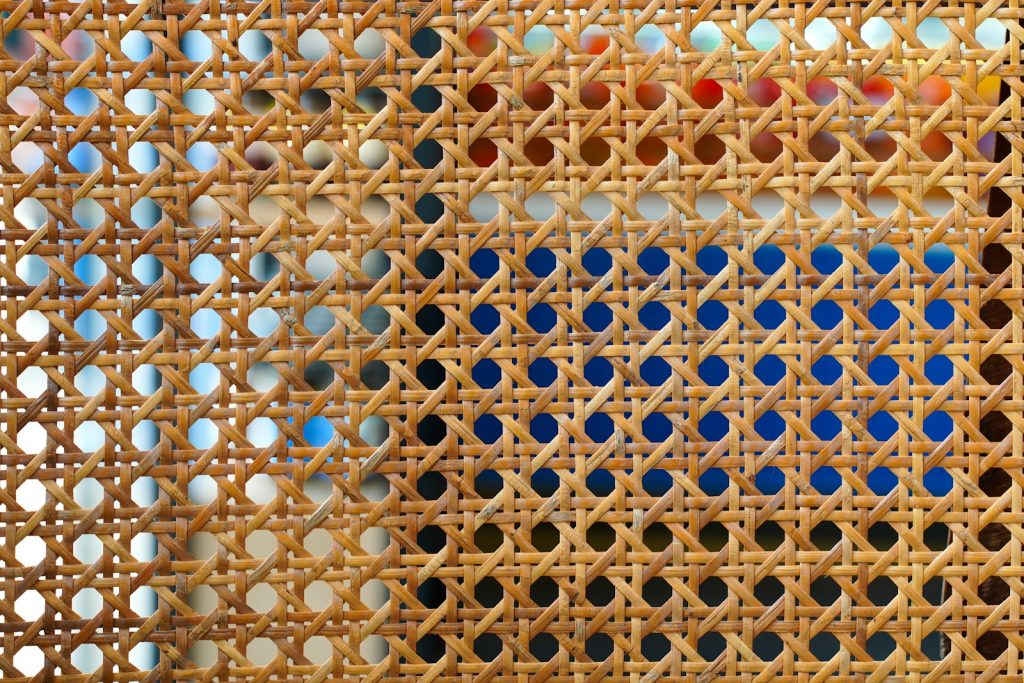
The primary forms of rattan webbing include open weave (e.g., Lho pattern) and closed weave (e.g., Sari pattern). Open weave, characterized by its hexagonal or square mesh, is common for chair backs and cabinet doors, allowing for airflow and a lighter visual presence. Closed weave, presenting a tighter, more opaque surface, is often chosen for drawer fronts, panels, or where a solid, continuous look is desired. The specific pattern and width required significantly influence sourcing logistics and availability.
UK Domestic Rattan Webbing Supply: Limitations and Realities
The UK market for rattan webbing is primarily a distribution market rather than a production hub. There are no significant domestic manufacturers of raw rattan webbing in the UK due to the absence of indigenous rattan palms and the specialized, labor-intensive weaving processes involved. Consequently, any `rattan webbing british` supplier typically acts as an importer, bringing in finished rolls from Southeast Asia.
This reliance on imported stock by UK distributors presents several limitations for buyers:
* Limited Variety: Domestic suppliers usually stock a curated range of popular patterns and standard widths. Specialized weaves, less common widths, or larger quantities of a single pattern may require special orders, often leading to extended lead times and higher per-unit costs.
* Higher Costs: Each intermediary in the supply chain adds a margin. Sourcing through a UK distributor means paying for their import costs, warehousing, and operational overheads, which are then passed on to the buyer. This inevitably results in a higher unit price compared to direct sourcing.
* Availability Constraints: Stock levels can fluctuate significantly. Large projects or sudden surges in demand can quickly deplete a distributor’s inventory, making consistent supply challenging without substantial lead time.
* Less Customization: The ability to request specific roll lengths, custom weave patterns, or particular rattan grades is significantly reduced when sourcing from a domestic distributor who buys in bulk standard lots.
For buyers with small, immediate needs, or those requiring very specific, small quantities for `chair restoration webbing uk`, a local distributor can offer convenience. However, for ongoing projects, larger volumes, or strategic procurement, exploring direct import options becomes financially and logistically compelling.
Sourcing Rattan Webbing from Indonesia: The Direct Import Advantage
Indonesia stands as a global leader in natural rattan production and processing. The country’s abundant raw material, coupled with generations of artisanal weaving expertise, positions it as the primary sourcing destination for high-quality rattan webbing. Rattan Webbing Supplier, based in Bali and Java, leverages this inherent advantage to provide a direct conduit from Indonesian producers to international buyers.
The benefits of sourcing `buy rattan webbing uk` directly from Indonesia include:
* Cost-Effectiveness: Eliminating intermediaries inherently reduces the final unit cost. Direct sourcing allows buyers to access factory-gate pricing, optimizing procurement budgets.
* Unrivaled Variety and Customization: Our network of vetted producers in Cirebon and other weaving centers offers an extensive range of patterns—from classic Lho (hexagon open weave) and Sari (closed weave) to more intricate Batik and Nona patterns. We can facilitate custom weave development for unique project specifications, subject to viable MOQs.
* Quality Control at Source: As Bayu Kusuma, Head of Webbing Sourcing & Export, I personally oversee the vetting of producers. Our QC process focuses on weave consistency, ensuring uniform mesh and tension; roll length accuracy, verifying stated meterage; and critical moisture control, preventing mold or brittleness during transit and storage. This direct oversight minimizes quality discrepancies common with indirect procurement.
* Scalability: We handle both small batch orders via Less than Container Load (LCL) and large volume requirements via Full Container Load (FCL), providing flexibility for diverse project scales.
Incoterms and Shipping for UK Buyers
For direct imports from Indonesia, the standard Incoterm for bulk orders is FOB (Free On Board). Under FOB, Rattan Webbing Supplier is responsible for getting the goods to the named port of shipment (typically Semarang or Surabaya, Indonesia) and loading them onto the designated vessel. The buyer assumes all risks and costs from that point onwards, including ocean freight, insurance, customs clearance in the UK, and onward domestic transport. This allows buyers maximum control over their shipping arrangements and costs.
For smaller `buy rattan webbing uk` orders that do not warrant a full container, we facilitate LCL (Less than Container Load) shipments. With LCL, your goods share container space with other cargo, reducing freight costs significantly while still benefiting from direct sourcing. While LCL typically has slightly longer transit times due to consolidation, it offers a cost-effective solution for trial orders, specialized projects, or replenishment stock that doesn’t meet FCL volume.
Key Considerations for Importing Rattan Webbing to the UK
Successful direct import relies on clear understanding and communication of several critical factors.
Quality Control (QC) and Consistency
Our commitment to quality begins at the source. We work with producers who demonstrate consistent craftsmanship. For handwoven products, minor natural variations in rattan color and weave tension are inherent and part of the material’s charm. We establish acceptable tolerances with our buyers upfront. Our QC checks before export include:
* Weave Consistency: Inspection for uniform pattern, tight weaving, and absence of significant flaws or breaks.
* Roll Length Accuracy: Verifying that each roll meets the specified length (e.g., 15m or 30m).
* Moisture Control: Rattan is a hygroscopic material. Proper drying and packaging are paramount to prevent mold growth or material degradation. We ensure rattan is dried to an optimal moisture content (typically 8-12%) and packed in climate-controlled conditions where possible, using desiccants for container shipments as an added safeguard.
Minimum Order Quantities (MOQ)
MOQs are a reality of direct factory sourcing. They enable producers to achieve economies of scale and dedicate production lines efficiently. Our MOQs are pattern and width-dependent.
For popular patterns like Lho (classic open weave) or Sari (closed weave), a typical MOQ for a single width might be 50-100 linear meters per pattern. For less common patterns or custom weaves, MOQs can range from 200-500 linear meters. We consolidate orders for LCL shipments, allowing for a mix of patterns and widths within a reasonable total volume. We do not promise what Cirebon ateliers cannot deliver; specific, low-volume custom requests may not be feasible.
Lead Times
Lead times for `rattan webbing uk` imports comprise two main components:
1. Production Time: This varies based on pattern complexity, width, and current factory load.
* Standard patterns (Lho, Sari) in common widths: 3-5 weeks for a typical FCL order (approx. 5,000-10,000 linear meters).
* Specialized patterns or very large orders: 6-10 weeks.
2. Shipping Time (Sea Freight): From Indonesian ports (Semarang/Surabaya) to UK ports (Felixstowe/London Gateway):
* FCL: Approximately 4-6 weeks.
* LCL: Approximately 5-8 weeks (due to consolidation time).
Total lead time from order confirmation to arrival at UK port typically ranges from 7 to 14 weeks, depending on the specifics. Air freight for urgent, smaller volumes is an option but significantly increases per-meter cost.
Packaging and Roll Specifications
Our standard packaging involves individual rolls wrapped in plastic film for protection against moisture and dust, then bundled or palletized for container loading.
* Standard Roll Lengths: 15 linear meters or 30 linear meters.
* Common Widths: 45cm, 60cm, 90cm. Other widths are available upon request, subject to MOQ.
Export Documentation
Rattan Webbing Supplier provides comprehensive export documentation to ensure smooth customs clearance in the UK. This includes:
* Commercial Invoice
* Packing List
* Bill of Lading (for sea freight) or Air Waybill (for air freight)
* Certificate of Origin (if required for preferential tariff treatment)
* Phytosanitary Certificate (required for natural plant-based materials to confirm pest-free status)
These documents are prepared in accordance with international trade regulations and specific UK import requirements.
Plan your trip to optimizing your rattan webbing procurement. We are available via WhatsApp to discuss your specific needs.
Navigating UK Import Duties and Post-Brexit Documentation
Post-Brexit, UK buyers importing goods from outside the EU must navigate the UK Global Tariff (GTa) and specific customs procedures.
Customs Tariff and UK GTa Rate
Rattan webbing falls under Chapter 46 of the Harmonized System (HS) Code, specifically related to manufactures of straw, esparto, or other plaiting materials. The precise 8-digit or 10-digit commodity code will depend on the exact type of rattan webbing (e.g., woven, unbleached, bleached).
* Buyer’s Responsibility: It is the buyer’s responsibility to confirm the correct commodity code and the applicable UK GTa rate for rattan webbing. The UK government’s trade tariff website is the official source for this information.
* Example: As of last verification (June 2026), many raw or simply processed rattan products under Chapter 46 might have a UK GTa rate of 0% or a low percentage. However, this is subject to change, and confirmation by the buyer is crucial.
Post-Brexit Requirements
Importing into the UK post-Brexit requires adherence to specific protocols:
* EORI Number: UK businesses importing goods must have a valid Economic Operator Registration and Identification (EORI) number starting with ‘GB’.
* Customs Declarations: Comprehensive import declarations must be submitted to HMRC, typically handled by a customs broker or freight forwarder appointed by the buyer.
* VAT: Standard UK VAT (currently 20%) is generally payable on the total value of the goods plus shipping and duty at the point of import. This VAT can typically be reclaimed by VAT-registered businesses.
We advise all UK buyers to engage with a reputable UK customs broker or freight forwarder. They can provide precise guidance on commodity codes, duty rates, VAT implications, and manage the customs clearance process efficiently on your behalf.
Sample Acquisition and Logistics
For critical evaluation of material quality, weave, and color, receiving samples is essential.
* DHL Courier: We utilize DHL Express for sending sample rolls to the UK. This ensures rapid delivery (typically 3-5 business days) and reliable tracking.
* Process: Buyers can request specific patterns and widths for samples. While we strive to provide samples at a nominal cost or free for serious inquiries, the courier charges will be borne by the buyer. We prepare the necessary export documentation for sample shipments to ensure smooth passage through customs.
We believe in transparency and direct communication. No one can pay to change what we publish; if you proceed with our partner they may pay us a referral fee at no extra cost to you. Our aim is to facilitate direct, informed procurement.
Rattan Webbing Patterns and Specifications: A Comparative Overview
To assist UK buyers in their procurement decisions, here is a summary of typical patterns, specifications, and pricing considerations for sourcing from Indonesia.
- Pattern Name: Lho (Hexagonal Open Weave)
-
Description: The most classic open weave, featuring a distinctive hexagonal mesh. Highly versatile, offering transparency and breathability.
Common Widths: 45cm, 60cm, 90cm.
Standard Roll Lengths: 15m, 30m.
Typical MOQ: 50 linear meters per width.
Indicative Pricing (per linear meter, FOB Indonesia, last verified June 2026): £4.00 – £7.50, depending on width and volume.
Applications: Chair backs, cabinet doors, radiator covers, decorative panels.
- Pattern Name: Sari (Closed Weave)
-
Description: A tight, opaque weave that provides a solid surface. Offers a different aesthetic, often used where privacy or a continuous surface is desired.
Common Widths: 45cm, 60cm, 90cm.
Standard Roll Lengths: 15m, 30m.
Typical MOQ: 50 linear meters per width.
Indicative Pricing (per linear meter, FOB Indonesia, last verified June 2026): £4.50 – £8.00, depending on width and volume.
Applications: Drawer fronts, wall coverings, headboards, screens.
- Pattern Name: Batik (Decorative Weave)
-
Description: Intricate, often geometric patterns woven into the rattan, offering a more decorative and textured finish. Less common than Lho or Sari.
Common Widths: 45cm, 60cm.
Standard Roll Lengths: 15m, 30m.
Typical MOQ: 100-150 linear meters per width (higher due to specialization).
Indicative Pricing (per linear meter, FOB Indonesia, last verified June 2026): £7.00 – £12.00, depending on complexity and volume.
Applications: Feature furniture pieces, high-end interior accents, bespoke designs.
- Pattern Name: Nona (Square Open Weave)
-
Description: A simpler open weave with a square mesh, offering a clean, contemporary look. Often used as an alternative to hexagonal weaves.
Common Widths: 45cm, 60cm, 90cm.
Standard Roll Lengths: 15m, 30m.
Typical MOQ: 50 linear meters per width.
Indicative Pricing (per linear meter, FOB Indonesia, last verified June 2026): £4.00 – £7.50, depending on width and volume.
Applications: Modern furniture, screens, architectural details.
These price ranges are illustrative. Final pricing depends on order volume, specific width, and current raw material costs. We provide formal quotations upon inquiry.
Frequently Asked Questions
What are typical lead times for a container of rattan webbing from Indonesia to the UK?
From order confirmation to arrival at a major UK port like Felixstowe or London Gateway, the typical lead time for a full container load (FCL) of rattan webbing from Indonesia is approximately 7 to 11 weeks. This includes 3-5 weeks for production and 4-6 weeks for sea freight transit. For Less than Container Load (LCL) shipments, transit can extend to 5-8 weeks, making the total lead time 8 to 13 weeks.
Can I mix different patterns and widths in a single order to meet MOQ?
Yes, for LCL shipments, it is often possible to combine different patterns and widths to meet a consolidated Minimum Order Quantity (MOQ). This provides flexibility for buyers with diverse product lines or smaller project needs. For FCL orders, while mixing is possible, individual pattern/width MOQs still apply for efficient production scheduling. We recommend discussing your specific mix requirements with our sourcing desk.
How do you ensure moisture control during transit?
Moisture control is a critical aspect of exporting natural rattan. We work with producers to ensure the rattan webbing is dried to an optimal moisture content (typically 8-12%) before packaging. Rolls are individually wrapped in protective plastic film. For container shipments, we utilize industrial-grade desiccants placed strategically within the container to absorb ambient moisture and prevent condensation, safeguarding the material against mold and mildew throughout the sea journey.
What is the process for customs clearance once the shipment arrives in the UK?
Once your rattan webbing shipment arrives at a UK port, your appointed customs broker or freight forwarder will handle the customs clearance process. They will submit the necessary import declarations to HMRC, using the documentation we provide (Commercial Invoice, Packing List, Bill of Lading, Certificate of Origin, Phytosanitary Certificate). They will also calculate and arrange for the payment of any applicable UK import duties and VAT on your behalf. It is crucial to have your EORI number ready and funds available for these charges.
Is it possible to receive a custom weave pattern?
Yes, we can facilitate the development of custom weave patterns. This process involves sharing your design specifications, which our Cirebon ateliers will review for feasibility. Custom weaves typically require a higher Minimum Order Quantity (MOQ), often ranging from 200 to 500 linear meters or more, and a longer initial lead time for sample production and approval. We work closely with buyers to translate unique design visions into production-ready specifications, managing expectations regarding complexity and cost.
For further inquiries or to initiate an order, please do not hesitate to plan your trip to our contact page. Our team is ready to assist you, and we are also available for planning discussions via WhatsApp.